
Migration, Parallel Careers, and Childcare: The Diverse Workstyles Realized by SHAPE Partners Professionals
Corporate
Interview
Ai Toyoda / Principal
She holds a bachelor’s degree from International Christian University and a Master’s degree from Hitotsubashi University Graduate School of Business Administration, and previously worked at Kurt Salmon and Monitor Deloitte. She has led a wide range of projects for B2C businesses, particularly in consumer goods, retail, and apparel, covering mid- to long-term corporate strategy, business strategy, branding and marketing strategy, digital transformation, and commercial due diligence.
Kiyotaka Tanaka / Manager
After graduating from the Faculty of Economics at Kyushu University, he began a career at Recruit Holdings, followed by a role at an independent strategy consulting firm, before joining SHAPE Partners.He has worked with clients across a range of industries, including consumer goods, telecommunications and media, entertainment, and food manufacturing. Areas of expertise include mid-term business planning, marketing strategy, and new business development.
Yuki Kobayashi / Consultant
After graduating from the School of Political Science and Economics at Waseda University, he joined SHAPE Partners after working at Mitsui & Co. and Boston Consulting Group (BCG). He has experience in corporate strategy, overseas market research, new business development, and sales/HR reform projects with clients such as machinery/automotive manufacturers, consumer goods, and insurance companies. In February 2025, he relocated to Tokachi, Hokkaido, out of a desire to raise his children surrounded by magnificent nature.
SHAPE Partners upholds "member-first" and "aspiration-first" values. They respect individual aspirations not only in projects but also in workstyles.
This includs Toyoda, who leads projects full-time while raising children; Tanaka, who participates while running his own company; and Kobayashi, who relocated to Tokachi, Hokkaido, and continues to deliver results via full-remote work.
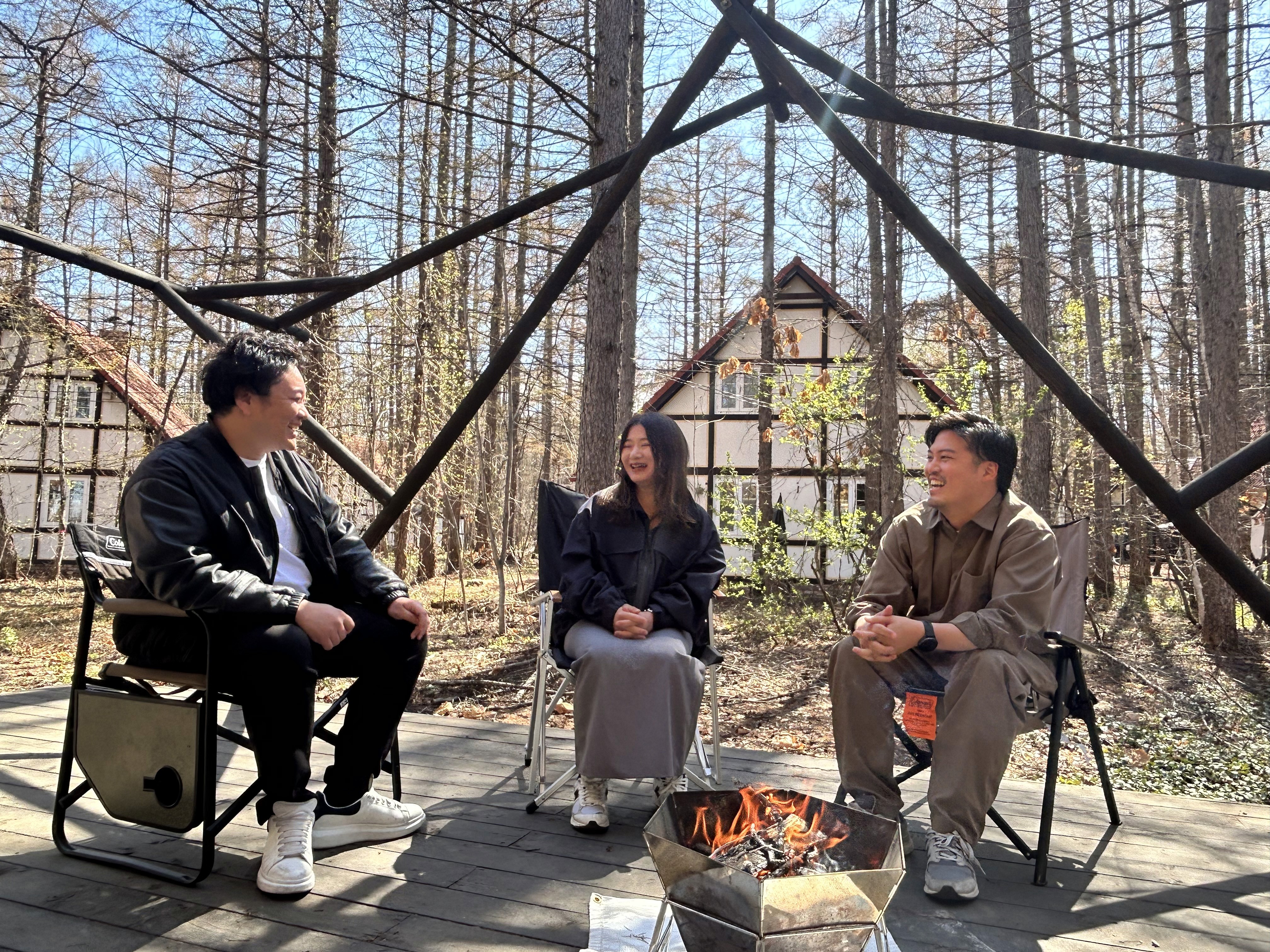
However, these ways of working were not provided by a formalized "system." What lies behind the fact that they were able to achieve their desired way of working, transcending the constraints of place and time? Also, why did they choose those working styles, and what kind of ingenuity do they exercise to continue producing results? Set in Tokachi, Hokkaido, each of them shared their thoughts while gathered around a bonfire.
Relocation, Parallel Career, and Childcare: Why We Chose "This Shape" of Working
――First, could you tell us about how you are currently working and why you chose your current working style?
Kobayashi: I currently live in the Tokachi area of Hokkaido and contribute to SHAPE Partners as an independent contractor. I originally worked at a major trading company, but I had long wanted a career that wouldn't confine me to a specific time or place. To achieve that, I knew I needed highly versatile skills, which led me to spend several years at BCG. After leaving BCG, just as my family and I decided to move to Hokkaido, a former colleague reached out and told me, "At SHAPE, you can adjust your utilization rate and work from anywhere." That was the turning point that brought me here.
Today, I run my own consulting firm supporting local businesses in Hokkaido, while dedicating about half of my capacity to SHAPE, working seamlessly with the team on projects.
Tanaka: I share a similar arrangement with Kobayashi-san, splitting my time equally between SHAPE and my own business. I started my career at Recruit doing new business development, and I always knew I wanted to build my own business someday. While at Recruit, I saw how external consultants could sharply break down issues and drive deep strategic thinking. Realizing those were the exact skills I needed to build a business, I jumped into the consulting industry.
I joined SHAPE partly because our CEO, Fujikuma-san, invited me when he founded the firm. More than anything, though, I was drawn to an environment where I could grow as a consultant while simultaneously driving my own business.
Toyoda: I currently work full-time while raising a three-year-old. Personally, I genuinely love consulting because it allows me to tackle entirely new challenges every few months, and I wanted to stay in this stimulating environment. On the other hand—whether it's viewed positively or negatively depends on the person—the consulting industry demands intense hours, making it historically difficult to balance work and childcare.
When I was figuring out my next steps after giving birth, I spoke with Fujikuma-san. I realized that at SHAPE, I could remain on the fast track as a professional while spending time with my child. That was the deciding factor for me.
Flexible Workstyles Anchored by Autonomy
――Even with flexible working styles, I imagine the expected level of output remains high. Do you have any tips or time-management strategies for continuing to deliver high-quality output?
Kobayashi: It really comes down to self-management. For me, to secure uninterrupted focus time, I wake up at 4:00 AM every day.
Toyoda: 4:00 AM...! I imagine it’s incredibly quiet out there in Hokkaido at that hour.
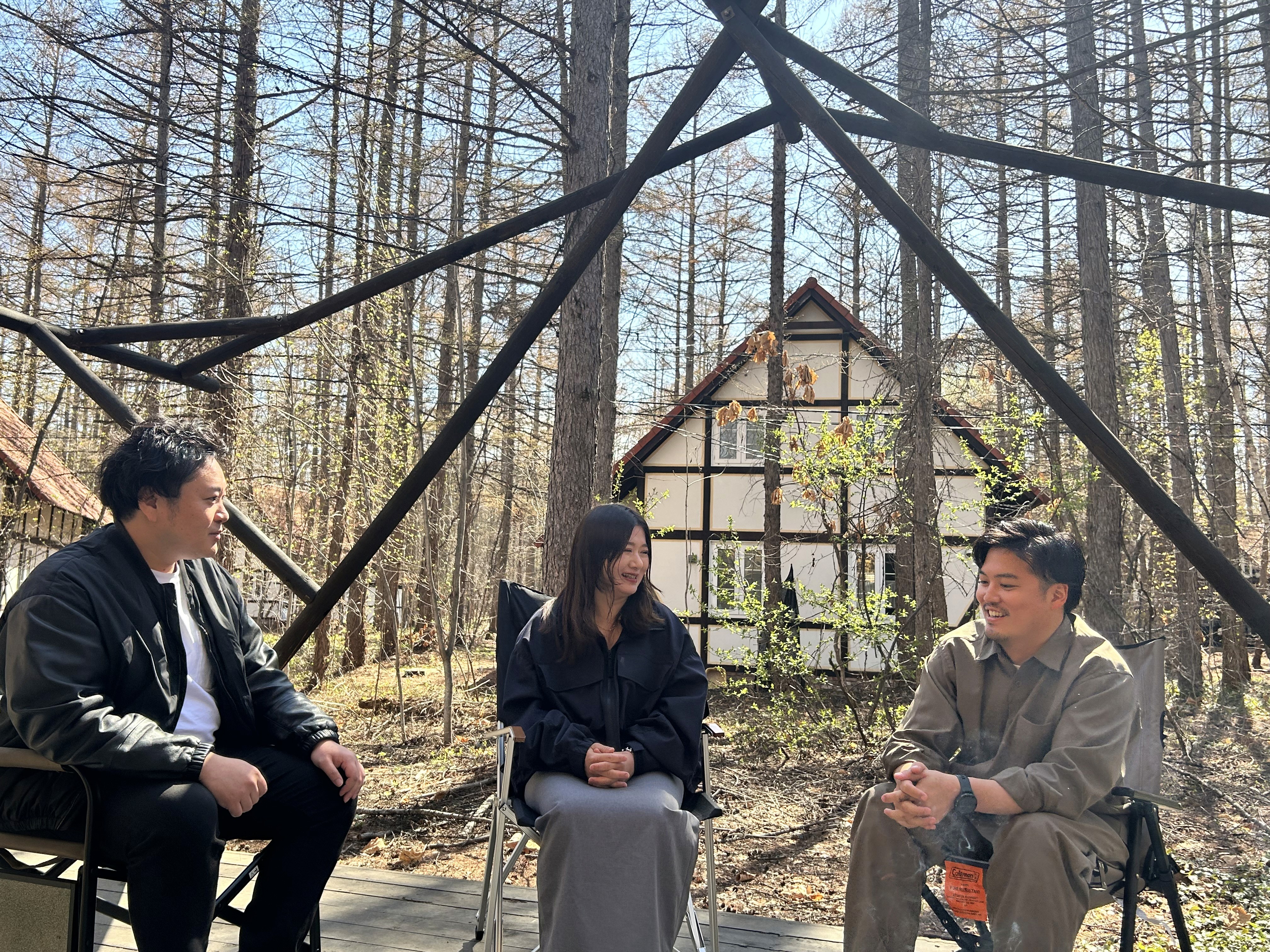
Kobayashi: It is. It’s completely silent before my family wakes up, so my concentration peaks. I make it a rule to map out and finish the bulk of my major deliverables for the day during that window. As I mentioned, since I run my own business in Hokkaido, I often spend over an hour driving between meetings during the day, which means I can't open my laptop. By shaping the core of my output early in the morning and sharing it with stakeholders and teammates ahead of time, I can maintain high flexibility without dropping the ball.
Tanaka: Managing your time to fit your lifestyle, just like Kobayashi-san does, is absolutely vital for making flexibility work.
Even though I run my own business, at SHAPE, we operate as a team. That’s why I work under a strict personal ethos: under no circumstances should a time constraint be an excuse for delaying deadlines or compromising quality. To stay on the same timeline and deliver the same caliber of work as full-time members, I always make a conscious effort to front-load tasks whenever I anticipate a heavy workload.
Toyoda: My approach is a bit different from the other two; I intentionally evolved my management style. Before having a child, my style leaned heavily toward diving deep into every single detail to guarantee quality. Now, I have to leave to pick up my child in the evening. Consequently, I’ve shifted to a style where I delegate ownership to team members, focusing my energy on pinpointing critical milestones and steering the strategic direction.
Of course, this doesn't mean just hands-off dumping. I constantly assess the team's skill balance to determine how abstract my guidance should be, and exactly where I need to roll up my sleeves versus where I should empower the team.
"Exceptional Professional Skills" as the Prerequisites for Flexibility
――I have heard that your working styles are considered "rare cases" even within SHAPE. What do you think is the factor that makes this possible?
Tanaka: To put it bluntly, it is entirely built on a foundation of trust earned through past performance—a mutual understanding that "this person will absolutely deliver value above a certain threshold." Right now, SHAPE relies heavily on referral hiring, which naturally aggregates top-tier talent. Everyone here possesses the core capabilities—structured thinking, slide creation, communication—required of a first-rate consultant to deliver consistent quality.
While my specific arrangement might be rare, having that trust rooted in proven capability is the ultimate prerequisite for flexibility.
Kobayashi: Tanaka-san is exactly right. In my case, because I am fully remote, I pay extra attention to communicate seamlessly with others, even down to a single chat reply. For clients, I focus on delivering high-impact work that exceeds expectations daily, while proactively communicating whenever we meet face-to-face to solidify that trust.
I believe that communicating seamlessly and exceeding expectations are what earn you the privilege to work without constraints.
Toyoda: The three of us actually collaborated on a project until quite recently. Because both Tanaka-san and Kobayashi-san have such an incredibly high sense of professional ownership, the project ran flawlessly—despite the time constraints and the fact that everyone was working remotely.
Tanaka: To branch off slightly, running my own business has dramatically heightened my resolution of how businesses actually operate. This has allowed me to approach SHAPE’s clients with a deeper sense of ownership in both proposal and execution. Embracing the flexibility of a parallel career has sharpened my practical skills, which in turn enhances the quality of my output at SHAPE—creating a powerful synergy.
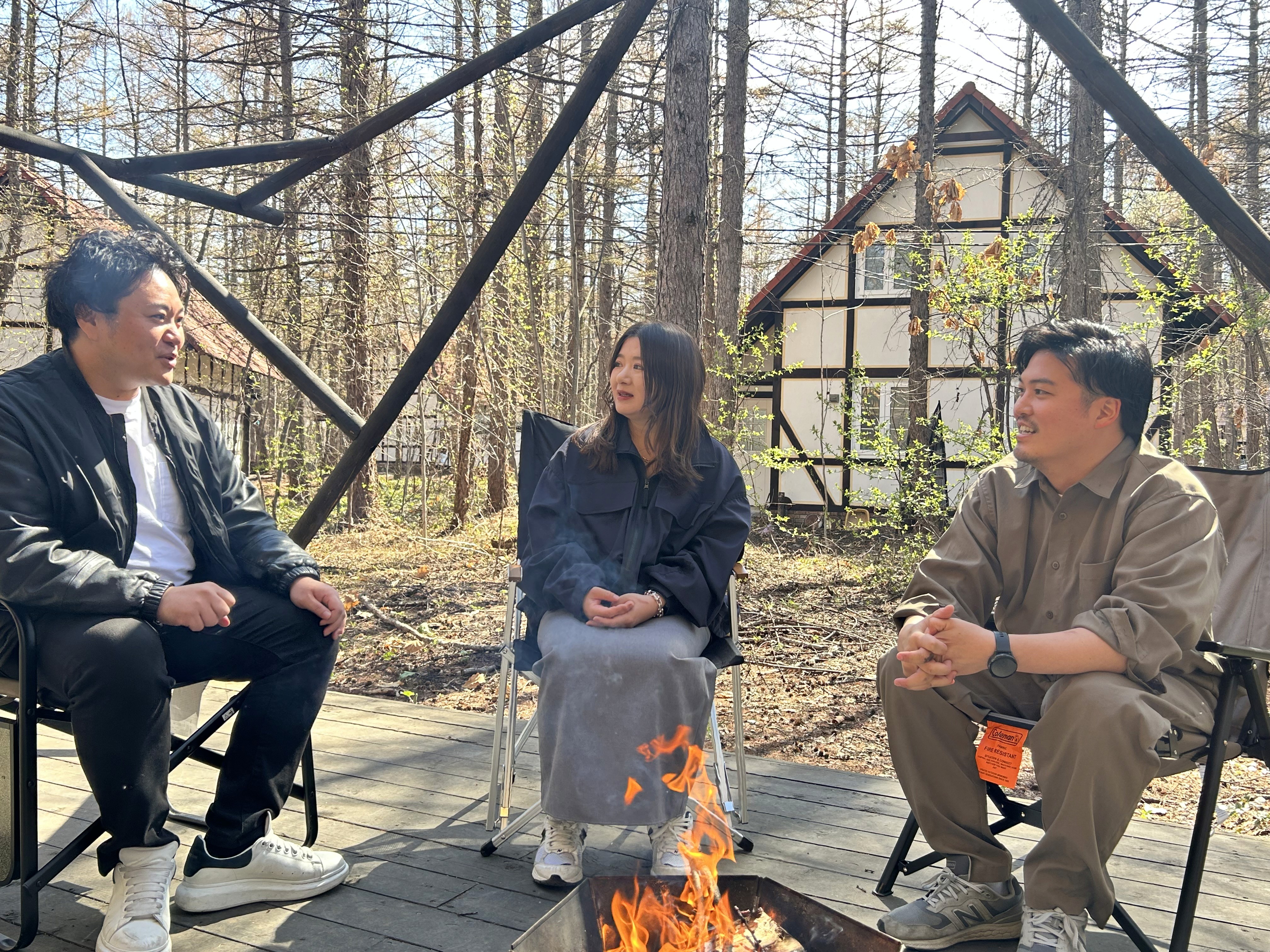
Where High Performance Meets Personal Aspiration
――As Toyoda-san mentioned earlier, the consulting industry generally has a reputation for hard work, or conversely, being extremely intense. Why is it that flexible working styles like yours can be realized at SHAPE?
Toyoda: At SHAPE, there is an environment where every individual deeply understands the core objectives and issues of a project, enabling them to act autonomously. Rather than management micro-managing tasks, the culture naturally emphasizes alignment on goals. From there, each member takes professional responsibility for delivering value while honoring the workstyle that suits them best.
Of course, discussions and course corrections happen as projects progress. However, those adjustments are never driven by internal politics or one-sided mandates; they are driven entirely by what yields the best results for the project and what allows members to focus on delivering intrinsic value. As a result, we rarely experience unnecessary re-work or major shifts in direction.
Consequently, members can channel their energy into deep thinking and client impact. Because we are a boutique, high-caliber organization, we don't lose time to bureaucratic processes, making it an ideal environment to grow as a professional.
Tanaka: I would also add that the firm is full of "good people." At SHAPE, being a "good person" is an explicit hiring criterion. While it sounds abstract, SHAPE defines it very clearly: "someone who is driven by their aspirations to take action, and who deepens their learning and experience through that journey."
Kobayashi: Fujikuma-san originally founded SHAPE with the vision of "creating a platform where professionals can thrive, fueled by their individual aspirations." Because of this, not only does everyone possess a strong personal drive, but there is a deep-seated culture of respecting each other's aspirations. That is why Tanaka-san and I feel completely accepted and valued as equal partners despite our non-traditional setups.
Toyoda: Of course, the reason Tanaka-san and Kobayashi-san feel that way is precisely because they have built ironclad trust within SHAPE by maintaining seamless communication and delivering top-tier output. So, it’s not that joining SHAPE automatically grants you unconditional freedom.
SHAPE is an environment where individuals who already possess established professional skills can pursue their personal aspirations while further elevating their expertise and track record. We look forward to welcoming more professionals who share the mindset of Tanaka-san and Kobayashi-san to our team.
