
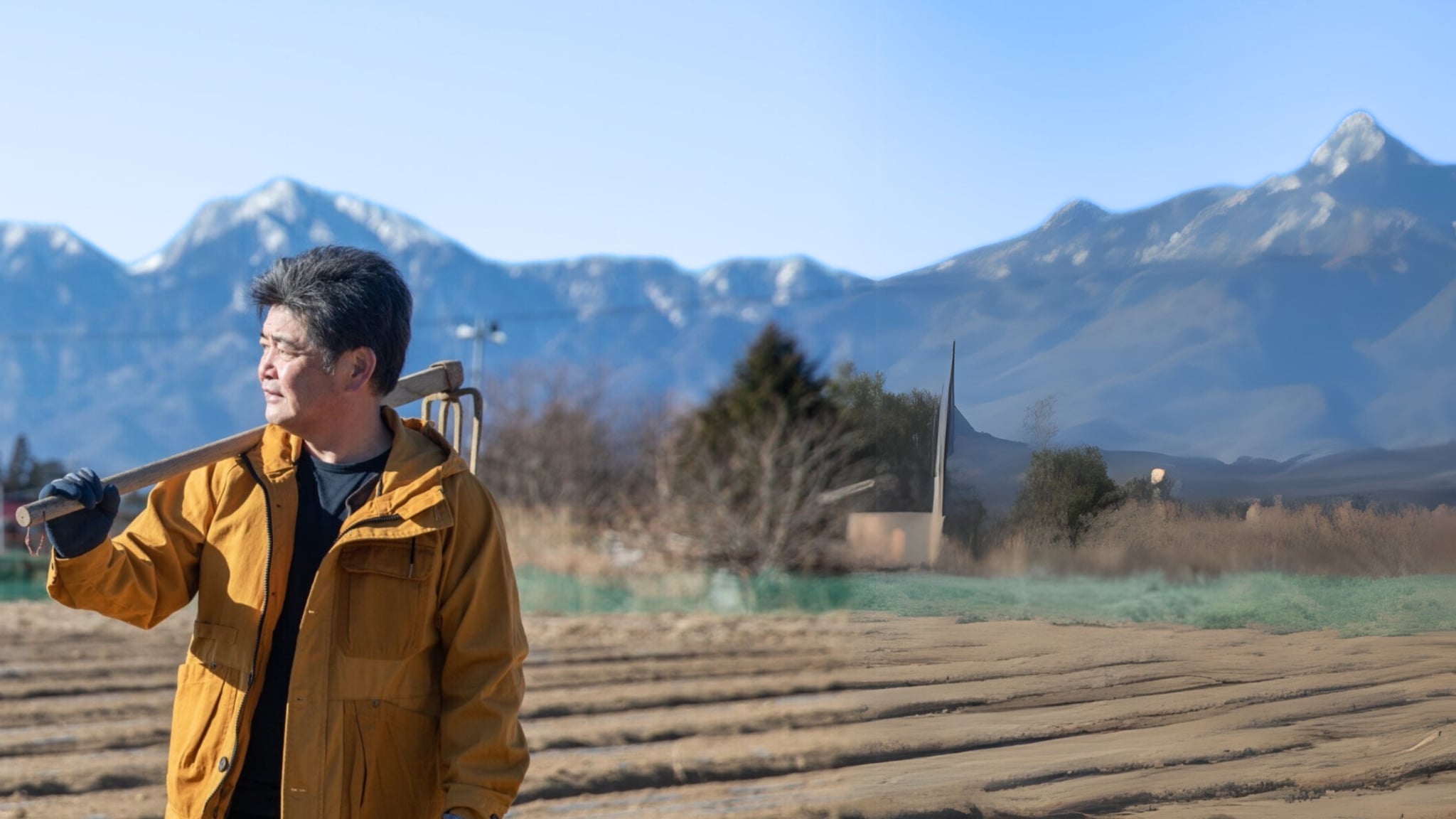
Special Contribution By Kimiyasu Kudo: Agriculture as a Catalyst for Next-Generation Development and Athlete Career Transitions
Sports
Insights
Kimiyasu Kudo / Advisor
After graduating from Nagoya Denki High School, now Aichi Institute of Technology Meiden High School, in 1982, Kudo joined Seibu Lions. He later played for teams including Fukuoka Daiei Hawks, Yomiuri Giants, and Yokohama BayStars. During his playing career, he contributed to 14 league championships and 11 Japan Series titles, earning a reputation as a championship-winning pitcher. Kudo played professionally for 29 seasons and officially announced his retirement in 2011. In 2015, he was appointed manager of Fukuoka SoftBank Hawks, leading the team to five Japan Series championships over seven seasons through 2021. His individual honors include two MVP awards, four ERA titles, and four winning percentage titles, with a total of 224 career wins. He received the Shoriki Matsutaro Award five times, tying the all-time record, and was inducted into the Japanese Baseball Hall of Fame in 2016. In 2020, while serving as manager, Kudo completed a master’s degree in physical education at the Graduate School of Comprehensive Human Sciences, University of Tsukuba. He entered the doctoral program in April 2022 and is currently conducting research and medical screening activities toward obtaining a doctorate in sports medicine. He assumed the role of Advisor at SHAPE Partners in 2024.
*This article is a special contribution from Kimiyasu Kudo, Advisor to SHAPE Partners. Having achieved numerous honors at the pinnacle of professional baseball, Mr. Kudo shares in his own words the motivations behind his dedication to agriculture and the future vision he is cultivating through this work.
Why Agriculture? The Realities of Japan
Having spent many years in the hyper-competitive world of professional baseball, I am frequently asked why I now dedicate the intervals between my various professional commitments to working in the fields and promoting agriculture.
The initial spark was simply helping my son with his own agricultural venture. I found myself genuinely captivated by the joy of touching the earth and facing nature, which eventually led me to establish my own farm in Hokuto City, Yamanashi Prefecture. However, as I spent more time on the ground and spoke with local farmers, the conversation invariably turned to the "difficulty of succession." I came to understand firsthand that most farms are facing a severe labor shortage; this realization shifted my motivation from mere personal enjoyment to a sense of duty, driving me to do whatever I could to protect Japanese agriculture.
The reality is that many of the sites currently sustaining our food supply rely heavily on young people who have come from overseas to work in Japan. One could say that the agricultural landscape is at a breaking point, barely functioning without their vital contribution.
When we visit a supermarket, we see beautiful vegetables lined up at all times, but this is not a "given." It is the result of the extraordinary labor and "tightrope" efforts of farmers who persevere in the face of these profound challenges.
In response to this situation, some argue that if we are short-handed, we can simply rely on imports. However, I believe we must first address the fundamental challenge of how to protect and expand Japanese agriculture. To that end, I am personally committed to the fields, driven by the conviction that I must first understand the reality of the "genba" (the actual site) myself.
Cultivating "Living Power": The Educational Impact of Agriculture
This commitment to agriculture is directly linked to the education of the next generation of children.
Why do agriculture and education intersect? It is because I feel a sense of crisis regarding the fact that children growing up in today’s convenient world are losing the opportunity to understand the background of "where food comes from." If they grow into adulthood knowing only an environment where anything can be purchased at a supermarket, they may struggle to even imagine how to sustain their own lives in a time of crisis.
This is why I want children to experience the reality of how vegetables are grown and the sheer amount of labor involved. I believe that this raw, primary experience does more than just foster gratitude for daily food; it cultivates a fundamental inner strength—the "power to live"—the confidence that one can create something with their own hands.
Currently, SHAPE Partners and I have been working a specific initiative aimed at "nurturing the power to live in the next generation." One such project is a collaboration with "Pyrus Academy," a baseball school that shares my mission of developing children’s life skills. We provide a platform that combines baseball instruction with agricultural experience, inviting the children to my farm to harvest green onions and potatoes while getting covered in mud.
For children who typically live in urban centers, the process of touching the power of nature and cooperating with peers to "harvest" something provides a type of learning that cannot be found in a daily life of merely consuming what is provided. Every time I see their beaming smiles, I am reminded of how vital these experiences truly are.
While society often focuses on glamorous professions, I believe that the "gritty" experience of making something together—whether in agriculture or fishing—solidifies and expands the future options for children. That is why we want to take the lead in providing a field where they can play and learn to their heart’s content.
Cultivating a "Long-term Perspective": A Strategic Anchor for Athlete Second Careers
Furthermore, the inherent nature of agriculture—building something from zero over a long period—serves as a clue to solving another major challenge in the sports world: the support of athletes' "second careers."
In Japan, the more seriously a young person has dedicated themselves solely to sports, the more likely they are to feel lost when they retire and enter society. While the lack of PC skills or experience in general business communication is a factor, I believe the more fundamental reason lies in the difference in "required time scales."
Athletes have spent their lives pouring everything into winning the immediate battle—the game today or tomorrow. In contrast, general office work and business environments require a long-term perspective and planning that looks three to five years ahead. This shift in mindset from "short-term focus" to "long-term planning" appears to be a significant barrier for many athletes.
These individuals are by no means lacking in ability. They simply haven’t had the opportunity to learn this different set of rules before being expected to work as corporate citizens with a long-term vision immediately after retirement. Therefore, athletes who have been fully committed to the "win now" mentality need a "runway" (a transition period) to acclimate to social rules and recalibrate their thinking.
Why is agriculture the ideal vessel for this transition? Because agriculture is the perfect environment to cultivate a "long-term perspective." In agriculture, you deal with nature, and results do not appear overnight. It requires the ability to look six months or a year ahead to the harvest, observing the weather and soil daily while steadily accumulating work according to a plan.
By starting in the arena of agriculture, athletes can leverage their inherent physical stamina and concentration while gradually relearning how to engage with society and adopt a long-term view. I believe that creating an environment for these steps will help dismantle the prejudice that "athletes can only do sports" and, ultimately, enhance the value of the entire sports world.
Moving Forward: One Gritty Step at a Time Toward the Future
Through my direct involvement in agriculture, I have identified two significant opportunities: the education of children and the support of athlete second careers. While these may appear to be separate initiatives at first glance, they are deeply connected at the root: the question of how to spend time building the foundation of Japan’s future.
By using agriculture as a starting point, we can expand the future options for our children and support the next stage for the sporting community. The road ahead is by no means easy, but with reliable partners like SHAPE Partners who share this vision, I am convinced we can generate positive change.
For the sake of the next generation and the future of the sports world, I intend to continue moving forward, one gritty step at a time.
