
Redefining the Standard through Value: How SHAPE Partners is Building the Member-First Professional Firm
Corporate
Interview
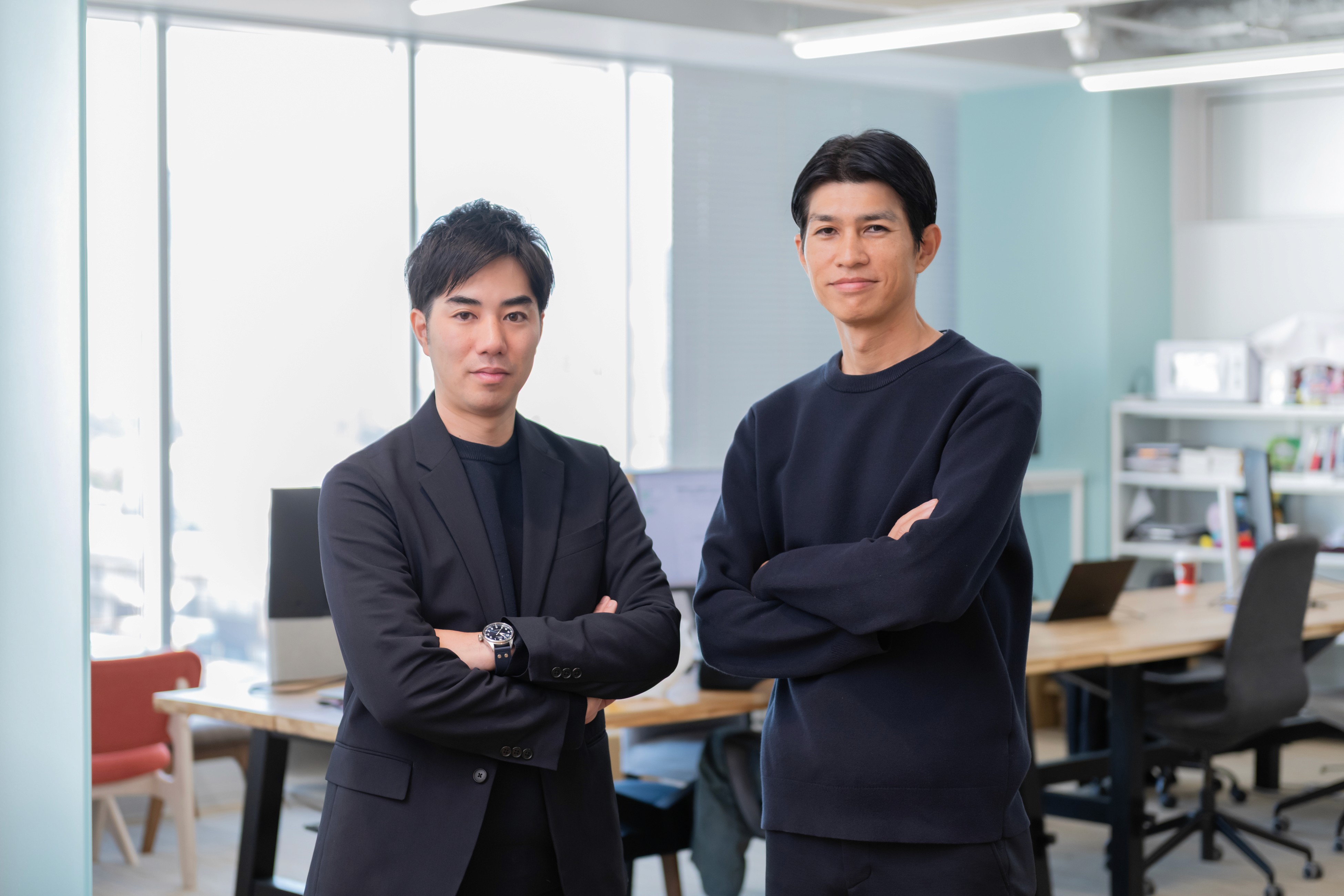
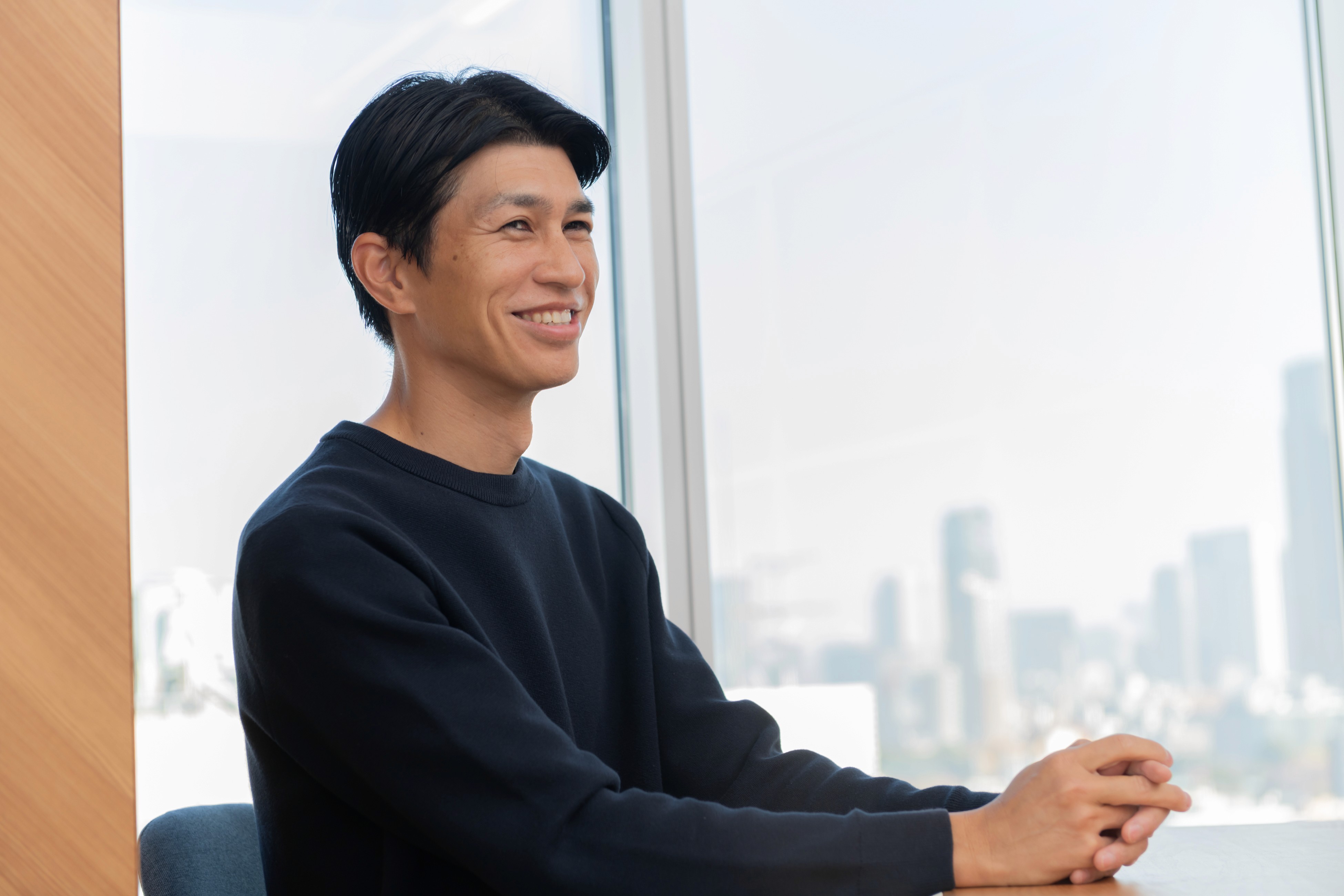
Kohei Fujikuma / Founder & CEO
A graduate of the University of Tokyo (M.S., Frontier Sciences), Fujikuma built his career at A.T. Kearney and Boston Consulting Group (BCG) before founding SHAPE Partners. He has a proven track record leading business strategy, marketing, and new business development for top-tier clients in Entertainment, Sports, Consumer Goods, and Healthcare.
Athlete Mindset: During his time at the University of Tokyo Baseball Club, he served as the team’s cleanup hitter, driving the team to a historic five-win season in the Tokyo Big6 Baseball League.
Takehiro Komamiya / Managing Director & COO
CEO of SHAPE Sports
After earning his M.S. from the University of Tokyo (Agricultural and Life Sciences), Komamiya sharpened his strategic expertise at Boston Consulting Group (BCG). He joined SHAPE Partners in 2023 to lead growth and innovation projects in Sports, Entertainment, and Media. In 2025, he founded SHAPE Sports, spearheading the group's specialized expansion into the athletic industry.
Athlete Mindset: A former student coach for the University of Tokyo Baseball Club, he led the team’s tactics and field leadership. He continues to give back to the sport as a coach and assistant manager for high school baseball.
Entering its fourth year, SHAPE Partners (“SHAPE”) is a professional firm built on a bold premise: that Value-First beats Revenue-First. By allowing member aspirations to drive business creation, SHAPE has moved beyond traditional consulting boundaries. We sat down with CEO Fujikuma-san and COO Komamiya-san to discuss the origin of this philosophy and their blueprint for the future of professional firms.
The Origin: The Gap Between Aspiration and Revenue
—To start, could you tell us how the two of you first met?
Komamiya: We first met while I was recruiting. I visited Fujikuma-san, who was an alumnus of the University of Tokyo baseball team. At that time, he was at A.T. Kearney, however, when I received an offer from BCG in 2014, he mentioned, “Actually, I’m moving to BCG as well.” By the time I joined in 2015, he was already my senior colleague by one year.
Although we never worked together for the same projects, we connected personally—having dinners, and even founding an internal baseball team together.
Fujikuma: My move to BCG was actually coincidental. I had spent about seven years at A.T. Kearney focusing on the consumer goods industry. When I heard BCG was planning to sponsor a major international sporting event, I decided to move to BCG because I heard they were becoming a sponsor for a major international sporting event. I was driven by the aspiration to handle global-scale sports business projects.
After joining BCG, I did work on that international event and other projects in fields I enjoyed, like the consumer goods industry. However, I began to see a structural gap. While I had a deep aspiration for the sports and entertainment sectors, their business scale is often smaller compared to other industries. In a large firm, we are naturally pressured to prioritize high-revenue, large-scale projects. This isn't unique to BCG; it's the standard operating model for all major consulting firms.
Generating revenue to grow a business is essential, and there is certainly a thrill in moving massive projects. Yet, many of the sports and entertainment initiatives I truly wanted to tackle simply didn't "fit on the table" at a firm like BCG due to their size.
Komamiya: I can imagine the situation. For the first five years after joining the firm, I was fully immersed in various projects across multiple industries. At that stage, the sheer speed of skill acquisition and professional growth was exhilarating. However, once I was promoted as a Manager, the priority shifted to team development and project delivery. I had to lead and produce outcomes, regardless of whether the industry resonated with me or not.
As soon as one project ended, the next assignment was determined irrespective of my personal will. I was tired of the situation, so I stopped and asked myself, “What is the purpose driving my work?”
Driven by that question, I dug deep into what I actually wanted to do. This introspection led me back to the same place: my aspiration was in sports and baseball. I realized that if I didn't take action now, I never would. I knew I needed to talk to someone who understood this path, and the first person who came to mind was Fujikuma-san.
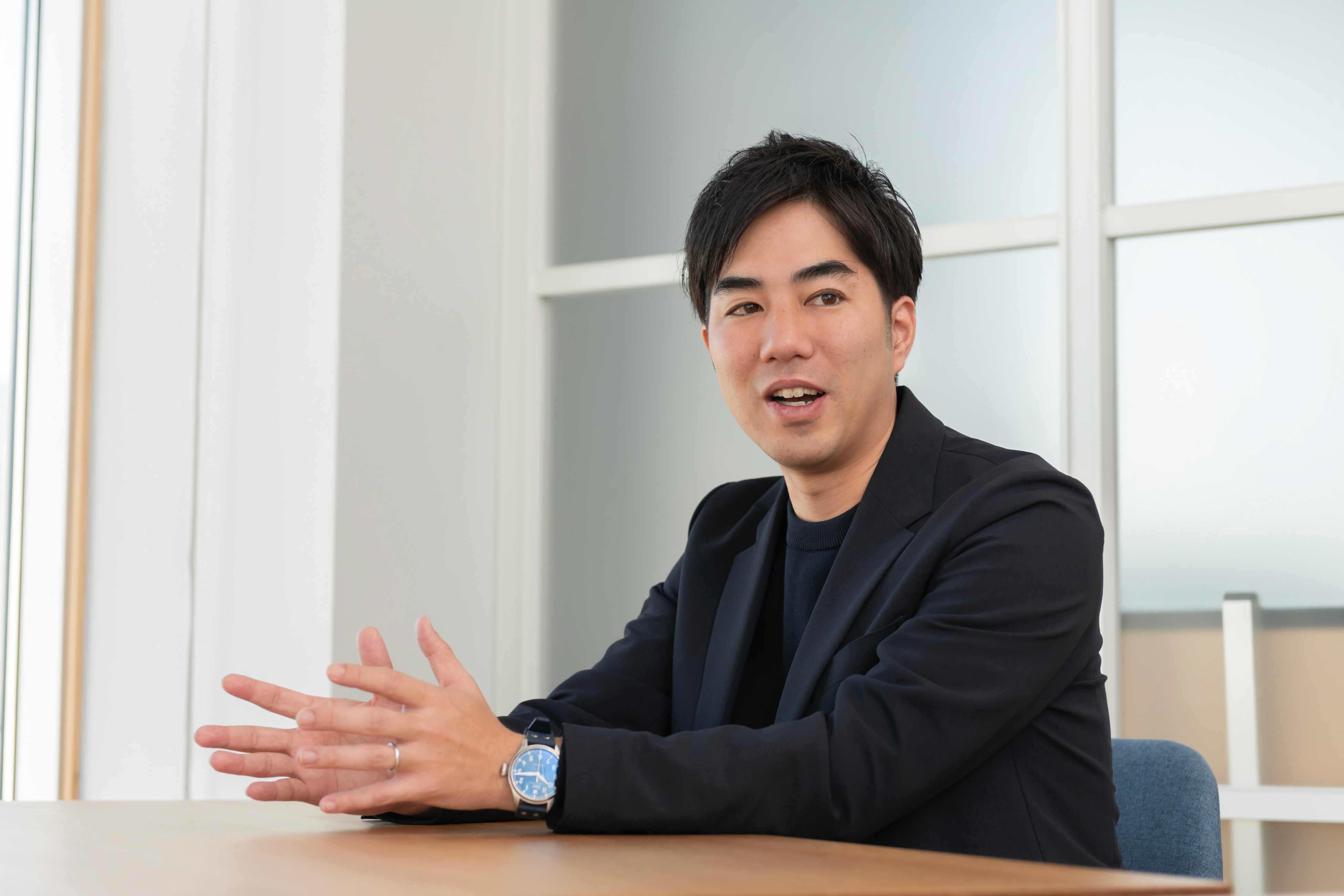
Fujikuma: When Komamiya-san contacted me, I had left BCG, spent time at a boutique firm handling sports business, and had only recently gone independent. I was starting from absolute zero—no office, no staff, just myself and a few gracious clients.
My departure from BCG wasn’t driven by frustration, but by an undeniable passion for the sports business. The real catalyst was the time I spent studying in Los Angeles, where I immersed myself in the U.S. sports industry. I returned to Japan convinced that our market held immense growth potential. I tried to pave a way for sports business within BCG, but it struggled to gain the institutional priority needed to thrive.
I then joined a boutique firm specializing in the field, but following its acquisition by an investment fund, the culture shifted toward the same 'revenue-first' model seen at major firms. That’s when I knew I had to build it myself. That was the birth of SHAPE Partners.
Komamiya: I vividly remember resonating with Fujikuma-san’s vision when we met. He had founded SHAPE Partners as a 'Member-First' platform—a firm where individual aspirations are the core, and the primary focus is to fundamentally elevate the value of a client’s business or service. Seeing that sports was a strategic pillar and that high-profile clients were already involved, I decided right then to join as a founding member.
Maximizing Professional Fulfillment through “Value-First”
—SHAPE Partners embraces a “Value-First” philosophy. Could you provide further details on this?
Fujikuma: While revenue is a vital indicator of meeting client needs, the industry is currently overshadowed by a 'Revenue-First' mindset—one where people chase targets without asking 'why.'
At SHAPE, we choose a different path. We only take on projects where we truly resonate with the value the client provides to the world.
Our 'Member-First' philosophy means business begins with personal passion. When professionals pursue what they find genuinely valuable, they work with an intensity that is contagious. This energy empowers our clients and their organizations, creating a state of mutual fulfillment that naturally leads to revenue.
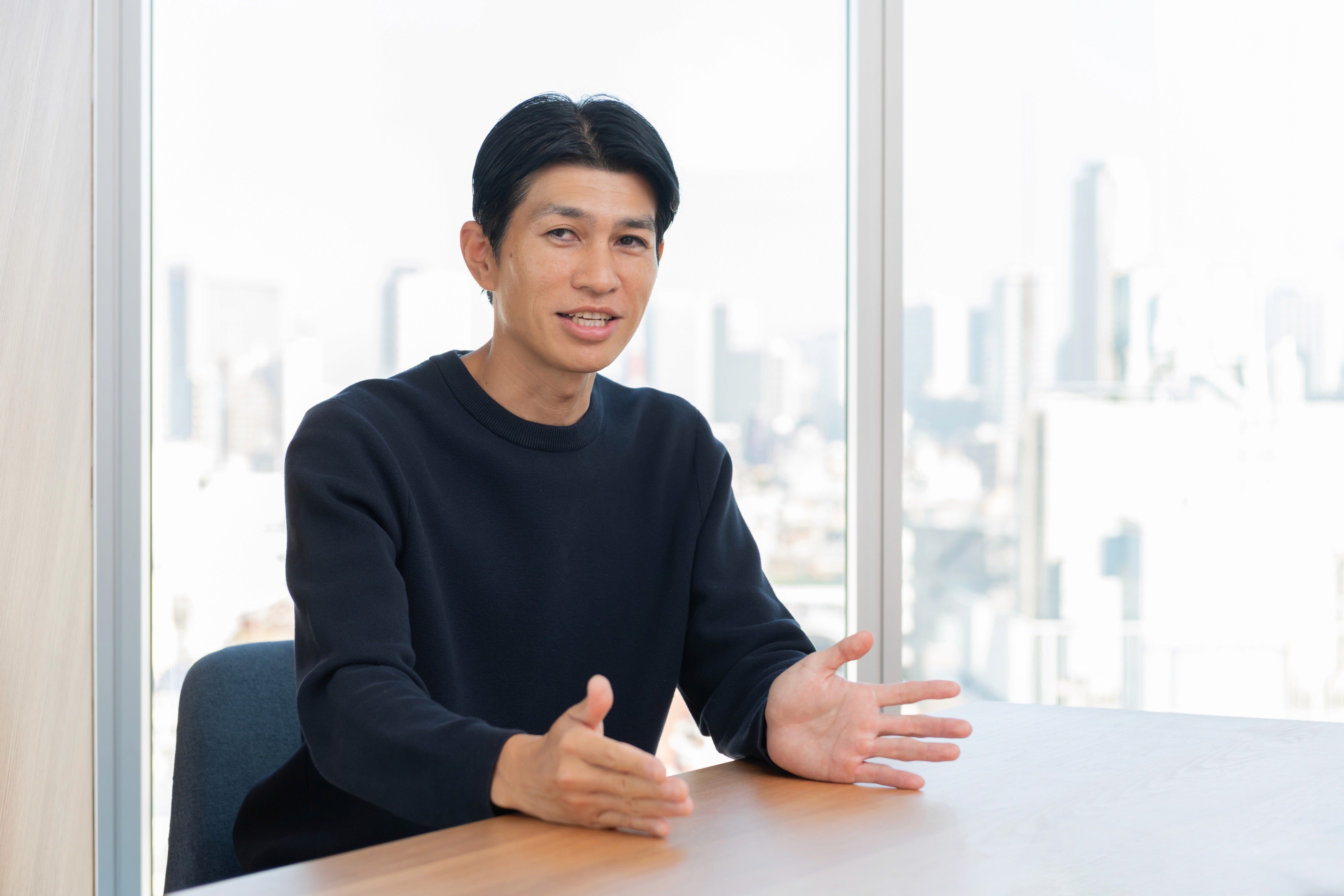
Komamiya: A 'Revenue-First' approach often generates profit at the expense of employee engagement. For example, team members end up working on projects they have no passion for, simply because they are 'chasing the numbers.
In contrast, our definition of “Value-First” is the “Maximization of Individual Well-being.”
We believe that personal passion drives professional excellence. When our team’s interests align with our clients’ needs, resilience becomes natural. This alignment leads to higher value creation and a culture where people truly thrive.
This flow eliminates unnecessary sacrifices. We believe that fostering individual fulfillment is the essence of true 'Value-Centricity.' Ultimately, people unlock their greatest potential when they are pursuing what they truly desire.
Fujikuma: That’s right - A true partnership requires mutual resonance. While we prioritize our empathy for the client’s impact, we also look for clients who truly connect with our 'why.' We believe that when both sides are fueled by the same level of passion, the potential for value creation is limitless.
— I see. In a "Value-First" model, does the actual consulting process or the nature of the work differ from traditional firms?
Fujikuma: In terms of the fundamentals—solving the client's core challenges—the essence of consulting remains the same. However, because we place such a high premium on personal mission and passion, our projects are rarely just "assigned." Instead, they are born from human connections. We often start with the feeling: "I want to work with this person" or "I want to do this specifically for them."
Komamiya: To give you a concrete example of those human connections—I once came across a key figure in a baseball-related book and felt a strong urge to meet them. By a stroke of luck, a mutual acquaintance introduced us just as I was thinking about it, which eventually led to a major project.
It didn't start with a formal proposal. We began with a casual conversation where I simply shared my thoughts and vision. Through that dialogue, we found a deep sense of mutual resonance. The client told me, "I'd love to see what we can do together as a project." Of course, they already had relationships with established firms, so it ultimately went to a competitive pitch. But in the end, they chose us—not just for the logic, but for the shared passion. That strong partnership continues to this day. We’ve seen very similar cases in the entertainment sector as well.
Fujikuma: It happens quite often. For example, a contact from an entertainment company I had previously partnered with reached out, saying, "I know someone who is struggling and I’d like SHAPE to sit down with them." The timing was perfect—Kitaura-san had just joined SHAPE from McKinsey, bringing a deep-seated aspiration for the entertainment sector. That synergy allowed our presence in the industry to expand rapidly from that point forward. Both sports and entertainment are tight-knit communities; when you consistently broadcast your aspirations, you find yourself blessed with these kinds of serendipitous connections.
Komamiya: I believe that because we place such heavy emphasis on "Value," our clients feel a genuine sense of security when referring us to others. We often hear from new partners that they can "feel the energy" coming from SHAPE, and that they feel at ease because we think from their perspective—as if we are standing in their shoes. Compared to traditional consulting firms, the "psychological proximity" between us and our clients is on a completely different level.
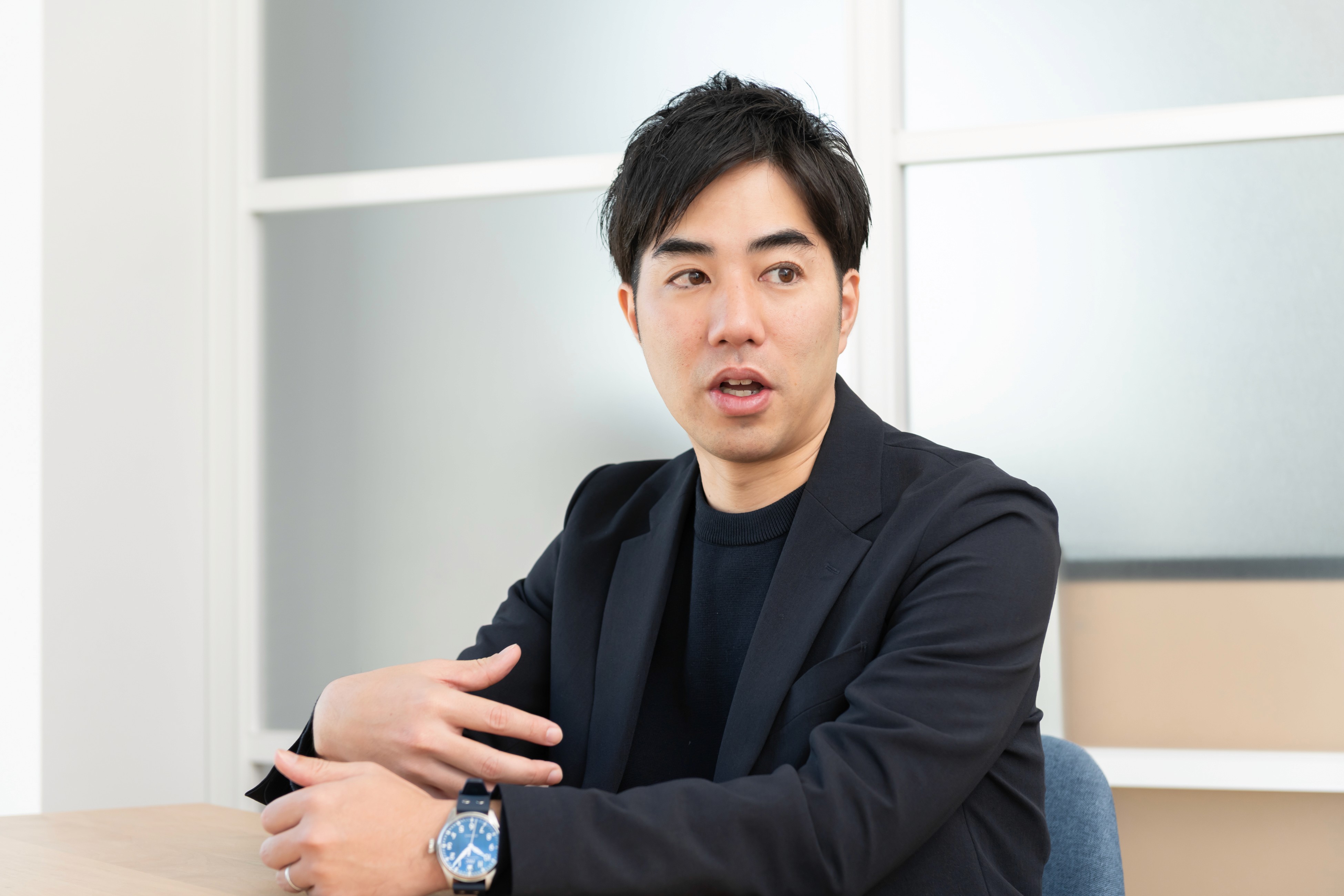
Fujikuma: Consulting, ultimately, is about human connection.
For clients who resonate with our vision, we are committed to delivering results that far exceed the fees we receive. And when a project reaches its natural conclusion, we are perfectly comfortable letting it end. Preserving the integrity of that relationship is what matters most to us.
In contrast, a "Revenue-First" mindset often leads to "project life-support"—creating new tasks just to extend the contract. While there are always problems to solve, you have to ask yourself: "Is this proposal truly born from a genuine concern for the client?" Over time, clients begin to sense that lack of sincerity, and the relationship suffers.
We prioritize healthy, honest partnerships over the mere acquisition or extension of projects. As professionals, we believe in speaking our truth, even when our opinions differ from the client’s. We are okay with a conversation not leading to a project if it means staying true to our principles. If we compromise our vision just to please a client, nobody wins in the end.
Interestingly, we often see clients return to us after trying other firms. They tell us, "It’s rare to find someone I can speak with so candidly." To me, this is the ultimate proof that our "Member-First" and "Value-First" model isn't just an ideal—it is a highly effective and sustainable strategy for the long term.
Platform Shaped by Member Aspirations
—Now in your fourth year, how do you view the growth of the business so far?
Fujikuma: To be honest, it has surpassed even my own expectations. We never started with a rigid roadmap or traditional benchmarks for revenue and headcount. Our only founding principle was to create a professional firm where we could do what we desire, in the way we want to do it. The goal was simply to build an environment where each of us could find genuine meaning through our passions.
Today, we have scaled into an organization of thirty professionals. Every member is driving projects they are truly excited about, working within their specific domains of aspiration alongside clients who resonate with our mission. The fact that we have achieved robust, steady financial growth while maintaining this joy is, to me, the ultimate proof that we are on the right track.
Komamiya: In our first year, Fujikuma-san, myself, and our colleague Tanaka-san—who also joined us from BCG—focused on establishing a solid management foundation. Our second year was defined by alignment; we saw a surge in team members who deeply resonated with our 'Member-First' philosophy, allowing us to solidify our organizational framework.
In our third year, we have moved into a phase of aspiration-led expansion. We have begun a process similar to the traditional Japanese 'noren-wake' (autonomous branching), launching specialized units like SHAPE Sports and SHAPE Global based on the specific passions of our team. This marks our next step in defining a new paradigm for the professional firm."
Moving forward, we do not intend to chase arbitrary revenue or headcount targets through rigid, top-down strategy. Instead, we want to remain a firm that is literally shaped by its members.
Our goal is not growth for growth’s sake. Rather, we are focused on cultivating an environment where every individual can relentlessly pursue their own 'aspiration' and passions. In our vision, SHAPE is not a predetermined destination; it is the organic result of a collective of professionals following what they love."
—Will your strategic focus remain centered on the sports and entertainment sectors as you move forward?
Komamiya: Regarding our focus areas, we actually use our namesake as a strategic acronym: SHAPE—standing for Sports, Human Capital, Apparel, Principal Investment, and Entertainment. Our immediate goal is to deepen our impact in these specific domains. Eventually, as I mentioned with our 'noren-wake' model, we aim to strengthen each of these sectors into their own independent entities, with the core SHAPE philosophy acting as the foundation for each.
Fujikuma: Our ultimate ambition is for SHAPE to become the "Destination" for top-tier professionals. We want to be the platform where talented individuals, possessed of strong professional skills, can transform their personal missions into reality exactly as they envision them. Ultimately, we believe that is how everyone becomes truly happy.
On the other hand, if I were the one dictating every move, the firm might score a 100 at best, or perhaps an 80 at worst—but we would never exceed 100. We would lose our capacity for evolution and the excitement of the unknown. That is why I want to build a platform where the individual is the protagonist. By fostering a synergy between myself and every member of this team, we can achieve a "150-point" result that no single leader could ever produce alone.
Even if we eventually scale to a firm of thousands, that growth will always be a byproduct—never the goal. Our priority will remain unchanged: the aspirations and passions of our members will always come first.
—Lastly, what kind of people do you hope to welcome to SHAPE Partners?
Komamiya: I often conduct final interviews. There are two defining characteristics of candidates that make me think, “I want to work with this person.”
First, someone who possesses a deep passion, and that passion is shaped by an origin story.
Second, someone with a strong desire to contribute to others.
We are committed to “Member-First,” but it is important to clarify: this is not a license to simply "do whatever you want." The baseline expectation is absolute professional excellence. Our commitment is to always deliver results that exceed client expectations. Even in a field you love, there will be grueling moments and setbacks. Passion alone can sometimes falter under that kind of pressure.
This is why an "origin story" is so powerful. Someone who can say, "I must solve this problem because of what I experienced in my past," possesses a rare level of resilience. That internal heat allows them to break through obstacles and truly thrive on the SHAPE platform.
Furthermore, at its core, consulting is the act of empathizing with and solving someone else's problems. Therefore, a desire to contribute to others is our foundation. Those who naturally think, "What can I do for the people around me?" even before thinking of themselves, possess an inherent magnetism. They are the ones who can build the deep, trusting partnerships that define SHAPE.
Fujikuma: If I may add, “Athlete Mind” is also important.
We are a professional firm providing high-stakes services; this is not work that just anyone can do. Once chosen, we expect our members to be individuals who possess the discipline for relentless self-improvement and a commitment to refining their unique craft.
While we provide a robust support system for our junior members, the ultimate goal is for everyone to stand on their own as a true professional. I want members who constantly ask themselves: "What can I deliver as an individual?" and "What is the unique value I bring to the table?"
At SHAPE, we don't look for people who are simply attracted to the environment because they "want to learn consulting skills" or are seeking "stability." Our current members are those who proactively think, "How can I change the SHAPE environment to maximize my own impact?" and then move to execute those ideas. We want to continue evolving the SHAPE platform by welcoming people with that "owner" mindset.
When every member has a strong personal aspiration, it can be a challenge to create a state where everyone is perfectly aligned at all times. However, with SHAPE Partners as our core axis, we are committed to continuously building the optimal environment for each individual—one that respects and elevates the unique mission of every member.
